

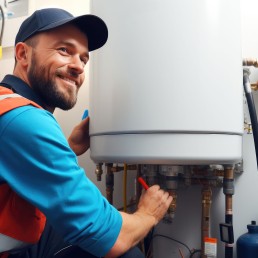
Hot water systems do not fail overnight. They give warnings, sometimes months in advance, that something is wearing out. The problem is that many of these warning signs look like minor issues that a repair might fix. Some of them are. Others mean the unit is past the point of economic repair and replacement is the smarter choice.
Here are five signs your hot water system is telling you it needs replacing, and how to tell the difference between a repair job and a replacement.
1. The system is over 10 to 15 years old
Every hot water system has a finite lifespan. As a general rule:
- Gas or electric storage tanks: 10 to 15 years
- Continuous flow (tankless) systems: 20 years or more
- Heat pump systems: 10 to 15 years
- Solar hot water: 15 to 20 years for the panels, 10 to 15 for the storage tank
Age alone does not mean the system must be replaced immediately. But if your system is in this age range and showing any of the other signs below, the economics of repair become difficult to justify. Spending $500 to $800 on a repair for a unit that may fail completely within a year or two is not good value.
Repair or replace? If the system is under 8 years old and the fault is isolated (a thermostat, element, or anode rod), repair is usually the right call. Over 12 years old with multiple issues, replacement is almost always the better option.
2. Rust-coloured water from the hot taps
If rusty or discoloured water appears only when you run the hot taps, the problem is inside your hot water system, not the mains supply. The most common cause is internal corrosion of the storage tank.
Storage hot water systems have a sacrificial anode rod inside the tank. This rod is designed to corrode before the tank does, protecting the steel lining. When the anode rod is fully consumed and not replaced, the tank itself begins to corrode from the inside out.
Once the tank lining is compromised, corrosion accelerates. Rust particles enter the water, and the structural integrity of the tank weakens. It is only a matter of time before the tank develops a leak.
Repair or replace? If the anode rod has been replaced regularly and the system is relatively young, a plumber can inspect the tank interior to assess the damage. If the tank lining is already failing, no repair will fix it. The tank needs replacing.
3. Strange noises: rumbling, popping, or banging
Some noise from a hot water system is normal. A gentle hiss or click when the burner ignites is expected. What is not normal is persistent rumbling, popping, or banging sounds coming from the tank.
These noises are caused by sediment buildup at the bottom of the tank. Over years of use, minerals in Melbourne’s water supply settle on the base of the tank. When the burner heats the water, it must heat through this layer of sediment first. The water trapped under the sediment overheats and creates steam bubbles that pop and rumble as they rise.
In early stages, a plumber can flush the tank to remove sediment. But if the problem has been going on for years, the sediment hardens and becomes very difficult to remove. Prolonged overheating also stresses the tank lining and reduces its remaining lifespan.
Repair or replace? If the system is under 10 years old and this is the first time you have noticed the noise, a professional flush may resolve it. If the system is older and the sediment has been building for years, flushing may not be effective and the damage may already be done. Consider replacement.
4. Inconsistent water temperature
If your hot water fluctuates between scalding and lukewarm, or runs out much faster than it used to, the system is struggling to maintain proper operation.
Common causes include:
- Failing thermostat: The thermostat no longer accurately reads the water temperature, causing erratic heating cycles.
- Sediment insulation: A thick layer of sediment at the base of the tank prevents efficient heat transfer, so the system cycles more frequently without heating the full volume of water.
- Failing heating element (electric systems): One of the two elements may have failed, reducing the system’s heating capacity by half.
- Worn burner or gas valve (gas systems): The burner is not producing enough heat or the gas valve is not opening fully.
Some of these are straightforward repairs. A thermostat or element replacement on an otherwise healthy system is worthwhile. But if the root cause is sediment buildup on an older system, the inconsistent temperature is a symptom of a larger problem.
Repair or replace? Have a plumber diagnose the specific cause. If it is a single component failure on a system under 10 years old, repair it. If it is a combination of issues on an ageing system, replacement is the better investment.
5. Visible corrosion or water pooling at the base
This is the most definitive sign. If you see rust stains, mineral deposits, or moisture around the base of your hot water system, the tank is likely leaking. A small weep today becomes a significant leak next week.
Tank leaks cannot be repaired. Once the steel tank wall has corroded through, the only option is replacement. Delaying at this point risks a sudden tank failure that floods the area, potentially causing water damage to your home.
Check the pressure relief valve as well. If water is constantly dripping from the overflow pipe, the valve may be faulty, or excessive pressure is building inside the tank due to a failing tempering valve. While the relief valve itself can be replaced, constant discharge can indicate deeper problems with the system.
Repair or replace? If water is coming from the tank itself (not a valve or fitting), the system must be replaced. There is no repair for a corroded tank.
When to repair vs when to replace: a summary
Use this as a general guide:
Repair is usually worth it when:
- The system is under 8 to 10 years old
- The fault is a single component (thermostat, element, anode rod, valve)
- The tank shows no signs of corrosion or leaking
- The repair cost is under a third of the replacement cost
Replacement is the better option when:
- The system is over 12 years old
- The tank is corroded or leaking from the base
- You have had multiple repairs in the past 2 years
- Energy costs have increased noticeably (the system is losing efficiency)
- Rust-coloured water is coming from the hot taps
Need your hot water system assessed?
If your system is showing any of these signs, call Suburban Gas and Plumbing on 1300 544 887. We will inspect the unit, give you an honest assessment, and let you know whether a repair makes sense or replacement is the smarter option. We supply and install gas, electric, and continuous flow hot water systems across Melbourne.